
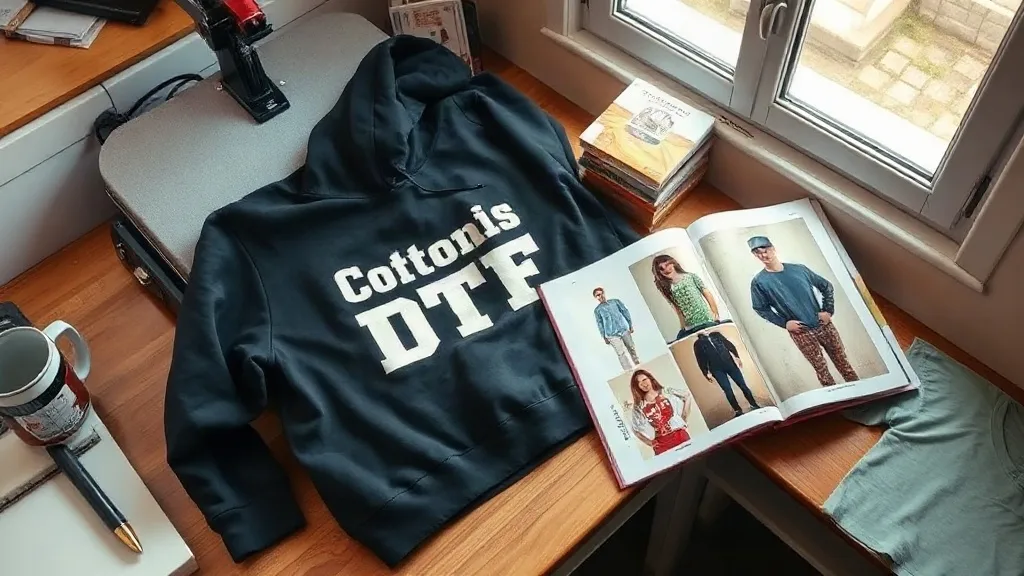
Most shops that run a sublimation press eventually hit the same wall. A customer walks in with a black 100% cotton hoodie and a full-color photo on their phone, and the sublimation setup that has served you well for mugs and polyester tees simply cannot help. That gap is where dtf transfers earn their place on the shelf, not as a replacement for sublimation but as the second tool that lets you say yes to jobs you used to turn away. If you are already comfortable with dye-sub, adding dtf to the mix is less about learning a new craft and more about understanding where one process stops and the other begins.
Why sublimation and DTF are not competitors
Sublimation dyes the fabric. The ink turns to gas under heat and bonds with polyester fibers, which is why the print has no hand feel at all and why it will not stick to cotton, dark colors, or most blends. DTF works the other way around. The design is printed onto a film, dusted with adhesive powder, cured, and then pressed onto the garment as a thin layer that sits on top of the fabric. That difference in mechanics explains everything about which jobs go where.
In practice, a hybrid shop splits work by material and volume. Sublimation owns light polyester, all-over patterns, and anything that needs to feel like it was never printed. DTF owns cotton, dark garments, blends, and short runs where ordering custom sublimation paper or cutting transfer sheets does not make sense. Once you frame it that way, the two processes stop competing for the same order and start covering each other's weak spots.
Reading a blank before you choose a process
The single most useful habit in a hybrid shop is checking the fiber content tag before quoting anything. A few rules of thumb that hold up across most suppliers:
- 100% polyester, light color: sublimation is usually the better call. Softer hand, lower per-unit cost at volume, no adhesive layer to worry about.
- 100% cotton, any color: DTF, full stop. Sublimation ink will not bond and will wash out or look faded from day one.
- Dark polyester: this is the tricky one. Sublimation needs a light base, so unless you are using a white-toner underbase, DTF is the practical answer.
- Cotton-poly blends: test a swatch. A 50/50 tee often takes sublimation with a slightly muted result, while DTF gives a cleaner, more saturated print.
- Rib knit, canvas, nylon: both processes struggle, but DTF on a lower press temperature usually wins for anything with texture.
Keep a small binder of pressed swatches on the counter. When a customer asks why their cotton shirt cannot be sublimated, handing them a physical sample explains it faster than any sentence you can say.
The workflow question: one press or two?
Shops with a single heat press often worry that adding DTF means constant changeovers. In reality the switch is quick if you organize it properly. Sublimation needs around 385 to 400 degrees Fahrenheit for 40 to 60 seconds with medium pressure. DTF typically runs cooler, in the 285 to 320 range depending on the film and powder, with a short pre-press to remove moisture and a second press after the transfer is peeled. Because the temperature ranges do not overlap much, you cannot accidentally run a DTF film at sublimation settings without noticing.
A few operational details that save real time:
- Batch by process, not by order. Press all sublimation jobs in one block, then reset the press temperature once and run the DTF queue.
- Keep a dedicated silicone sheet and a Teflon cover for DTF. Adhesive residue from powder transfers onto other surfaces and will show up as ghosting on the next sublimation job.
- Pre-press every DTF garment for five to ten seconds before loading the transfer. Moisture is the number one cause of peeling edges and cloudy prints.
- Store DTF films flat in a cool, dry drawer. Humidity ruins cured film faster than anything else in the shop.
If you are ordering transfer sheets rather than printing your own film, the workflow gets even simpler because someone else handles curing and powdering. That matters for shops that want the material flexibility without investing in a DTF printer and shaker.
Pricing when you have two processes on the menu
Customers do not care which machine printed their shirt. They care that the price is fair and the result looks good. That gives you room to price by job complexity rather than by process. A single-color logo on a cotton tee should not cost more just because it went through DTF instead of sublimation, but the higher material cost of DTF film and powder does need to be reflected somewhere.
A workable approach is to set a base price for a one-location print on a standard blank, then add for size, location count, and garment cost. Sublimation jobs on polyester come in slightly cheaper at volume because the consumable cost is lower. DTF jobs on cotton come in slightly higher, but you are also selling the ability to print on a blank that sublimation cannot touch, which is worth something to the customer. Shops that try to force identical pricing across both processes usually end up losing money on one of them.
For very small runs, a gangsheet order can bring the per-print cost down enough that a five-piece job still makes sense. That is the same logic behind dtf transfers near me services, where a local shop consolidates multiple small designs onto one sheet and passes the efficiency on to the buyer. If you are sourcing rather than printing, comparing gangsheet pricing against your own film cost is worth doing once a quarter.
Where DTF quietly outperforms sublimation
There are jobs where the choice is not close. Anything with a dark garment and a light design, for example. Sublimation on a black tee requires a white underbase layer, which adds a step and a slightly plasticky feel. DTF prints white ink directly as part of the film, so a white logo on a black hoodie is one press and done.
Small text and fine detail also tend to hold up better on DTF, especially at sizes under half an inch, because the ink sits on the surface rather than wicking into the fiber. That said, sublimation still wins on anything that needs to stretch with the garment, like performance wear and athletic jerseys, since the DTF layer can crack if the print is too thick and the fabric stretches aggressively. Matching the process to how the garment will be worn is the difference between a print that lasts a season and one that lasts a year.
Common mistakes when running both
The errors that show up most often in hybrid shops are predictable. Pressing a DTF transfer onto a polyester garment at sublimation temperature will scorch the film and leave a shiny, wrinkled patch. Reusing a Teflon sheet that has adhesive buildup from DTF on a sublimation job will transfer that residue onto the next shirt. And quoting a DTF job at sublimation speed, assuming the press time is the same, leads to underbidding when each piece actually takes two passes.
The fix is boring but effective: label your sheets, keep a written temperature card taped to the press, and time yourself on a real ten-piece order before you set prices. Shops that skip that last step are the ones that discover mid-season that their DTF jobs are running at a loss.
Frequently asked questions
Can I press DTF transfers onto polyester shirts that I normally sublimate?
Yes, and it is often the right call for dark polyester. Use the lower DTF temperature range and a light pressure so the film does not distort. Light-colored polyester still usually looks better with sublimation because there is no hand feel, but DTF is a safe fallback when you need a bright white or a metallic look.
Do I need a separate heat press for DTF and sublimation?
No. One press handles both as long as you change temperature and pressure settings between batches and keep separate cover sheets. The real cost of sharing a press is changeover time, not equipment, so batching jobs by process is the practical fix.
How do I explain the difference to a walk-in customer?
Keep it simple. Sublimation dyes the fabric and works best on light polyester. DTF prints onto a film and presses onto the shirt, so it works on cotton, dark colors, and blends. A physical swatch of each on the same blank settles most conversations in under a minute.
Which process is cheaper for a ten-shirt order?
It depends on the blank. On light polyester, sublimation is usually cheaper per unit because the consumable cost is lower. On cotton or dark garments, DTF is the only option that produces a durable print, so the comparison does not really apply. Price the job by the blank the customer wants, not by the process you prefer.
Will DTF transfers hold up as long as sublimation prints?
With proper pressing and normal washing, a well-applied DTF transfer lasts through dozens of wash cycles. Sublimation is effectively permanent because the ink becomes part of the fiber, so it wins on longevity for polyester. For cotton and dark garments, DTF is the durable choice by default since sublimation cannot bond at all.