
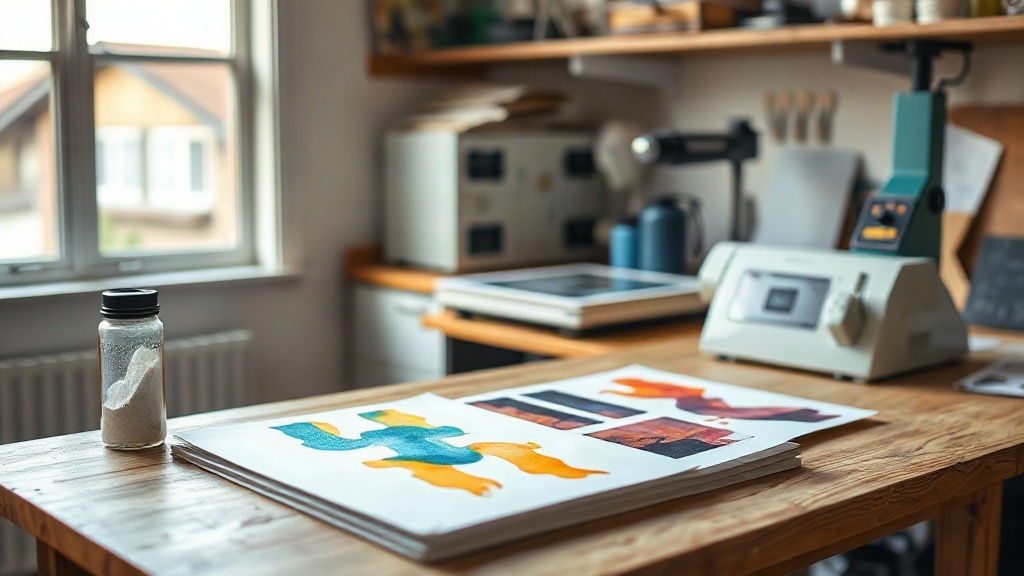
When a customer walks in with a phone photo of a watercolor pet portrait and asks for it on a cotton tote, most traditional print methods start to sweat. Screen printing needs separations and minimums. Vinyl cutting chokes on gradients. That gap is exactly where dtf transfers have quietly become the go-to solution for small shops, side hustlers, and anyone tired of turning down complex orders.
I have run a two-press setup out of a garage for three years now, and DTF has slowly taken over about half of my weekly volume. Not because it replaces everything, but because it handles the jobs that used to be a headache. This guide covers what I have learned the hard way, including the mistakes that cost me a full roll of film in my first month.
What DTF Transfers Actually Are
Direct-to-film printing works differently from DTG or screen printing. A printer lays down a CMYK image plus a white ink layer onto a PET film, then a hot-melt adhesive powder is applied while the ink is still wet. After curing, you have a transfer that can be stored, shipped, or pressed onto a garment with a heat press.
The white layer is the star of the show. It sits behind the color inks and acts as an opaque base, which is why dtf transfers show up vividly on dark navy hoodies, red canvas bags, or any fabric that would normally swallow a DTG print. You get the color fidelity of a digital print with the placement flexibility of a vinyl transfer.
Film, Powder, and Heat
Three variables control quality: the film, the adhesive powder, and your press settings. Cheap film curls at the edges and leaves a plastic halo. Coarse powder feels gritty on the finished shirt. Temperature and pressure decide whether the adhesive fully bites into the fabric weave or sits on top waiting to peel.
I keep a notebook with settings for every blank I use. A 100% cotton tee presses at a different time than a 50/50 blend, and polyester needs lower heat or the fabric dyes can migrate into the print. Fifteen seconds and 320°F works for most of my cotton blanks, but I always test a new supplier's shirts before running a batch.
Why Small Shops Keep Choosing DTF
The economics are hard to ignore once you run the numbers. There are no screens to burn, no color separations, and no minimum order. A single transfer costs pennies in materials, and you can print one shirt for a customer and the next shirt for a completely different design five minutes later.
- No color limits, so gradients, photos, and fine line art all work
- Works on cotton, polyester, blends, and even some canvas and denim
- Transfers store flat for months, so you can print ahead of demand
- One press handles every job, which keeps the workspace simple
That last point matters more than people expect. When your entire production line is a printer, a powder shaker, and a heat press, you can run a real business out of a spare room. I know a woman who ships 40 orders a week from a converted closet.
Where DTF Falls Short
Being honest about limitations saves money. dtf transfers have a slight hand feel compared to screen printing, especially on large solid blocks of white ink. If you are printing 500 identical black tees with a one-color logo, screen printing will still beat DTF on cost per unit and softness.
Stretch fabrics are another consideration. On high-stretch activewear, the print can crack if the adhesive does not flex with the fabric. Look for stretch-friendly powders and keep the design away from the highest-stretch zones.
A Workflow That Actually Holds Up
After a lot of trial and error, my process has settled into something repeatable. It is not glamorous, but it produces consistent results and almost no customer complaints.
- Prepare artwork at 300 DPI with transparent background, mirrored before printing
- Print on quality film and check the white layer for even coverage
- Apply powder while the ink is wet, shake off excess, and cure until the powder glosses
- Press at tested settings with firm pressure, then peel according to film instructions
- Do a stretch test on a scrap piece before running the full order
The stretch test is the step most people skip. Pull the cooled print gently in both directions. If it cracks or lifts, your temperature or pressure is off, and you would rather find out on a scrap than on a paid order.
Storage and Handling
Store finished transfers flat, in a cool dry place, away from direct sun. Stacking them face to face can transfer powder residue between sheets. I keep mine in a shallow drawer with parchment paper between layers, and they press cleanly months later.
Humidity is the quiet enemy. In a damp basement, powder can clump and transfers can stick together. A simple sealed bin with a silica packet solves most of it.
Design Choices That Print Well
Not every design translates equally well. Bold shapes and rich colors look fantastic. Very thin hairlines under a millimeter can disappear or break during pressing. If a client sends a delicate line drawing, I thicken the strokes slightly in the design file and show them a proof before printing.
Gradients and photographic images are where dtf transfers shine. A sunset photo on a tote bag comes out with smooth transitions that would take hours to separate for screen printing. For a small business, that opens up product lines that used to be off the table.
Common Questions From New Users
Can I use a regular home iron instead of a heat press?
You can, but results will be inconsistent. A home iron cannot deliver even pressure or hold temperature steady, so edges lift and adhesion is weak. For occasional personal projects it is fine, but for anything you sell, a heat press is the tool that pays for itself quickly.
How long do DTF prints last on a shirt?
With correct pressing and normal washing, a good transfer lasts as long as the garment in most cases. Wash inside out in cold water and avoid high dryer heat. I still wear a test shirt from two years ago with a print that looks nearly new.
Do DTF transfers work on 100% polyester?
Yes, with adjusted settings. Polyester needs lower temperature to avoid dye migration, and a lower-melt adhesive helps. Always test on a scrap of the exact blank you plan to use, because polyester blends vary widely between suppliers.
Is DTF cheaper than screen printing?
For small runs and one-off designs, yes, usually by a wide margin. For large runs of the same design, screen printing becomes cheaper per piece. The crossover point depends on your local costs, but it often sits somewhere around a few dozen identical shirts.
What is the minimum order for DTF?
There is no minimum. You can print a single transfer for a single shirt. That flexibility is the main reason so many small shops and hobbyists have adopted the method.
Getting Started Without Wasting Money
The temptation is to buy the biggest, fanciest setup immediately. Resist it. Start with a reliable printer, quality film, and a decent heat press. Learn your press settings on cheap blanks before you touch a customer's order. Keep notes, run stretch tests, and store transfers properly.
Once the basics are solid, dtf transfers give you a production method that handles almost anything a customer brings through the door, from a single baby onesie to a hundred-piece team order. That range, more than any single feature, is why the method has stuck around in my shop.