
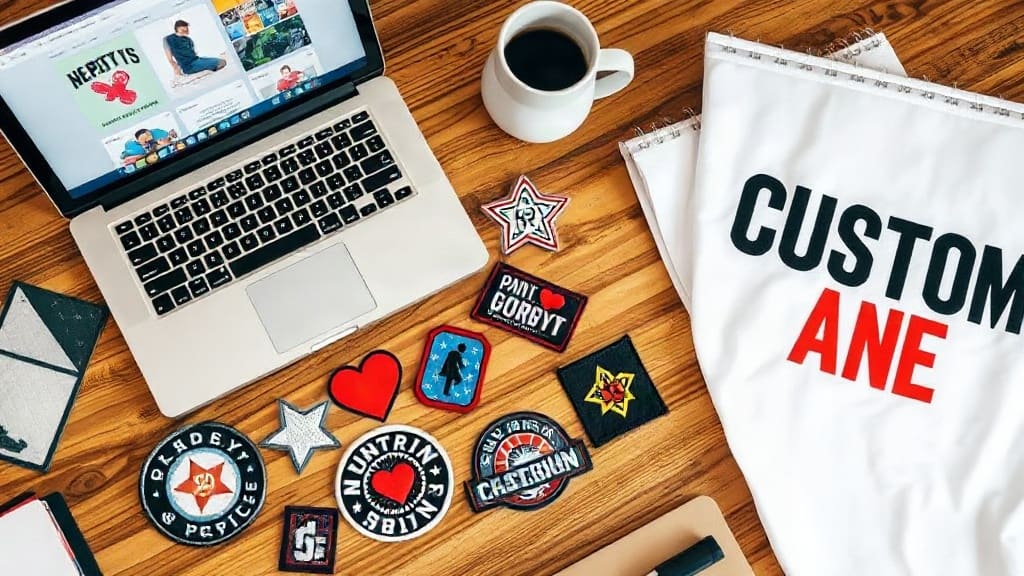
In the rapidly evolving world of e-commerce, print on demand has emerged as a game-changer for entrepreneurs and established brands alike. This fulfillment model allows you to offer unique, personalized products without the burden of inventory management. Among the most popular and impactful items in the print on demand catalog are custom patches and custom banner designs. These items not only enhance brand visibility but also create tangible connections with your audience. In this comprehensive guide, we will delve into the intricacies of print on demand, focusing on how custom patches and banners can be leveraged to grow your business. Whether you are a seasoned seller or just starting out, you will find valuable insights, practical tips, and expert advice to help you succeed.
Why Print on Demand Is Revolutionizing Custom Merchandise
Print on demand (POD) eliminates the need for upfront inventory investment. When a customer places an order, the product is printed and shipped by a third-party supplier. This model is particularly advantageous for small businesses and independent creators who want to test designs without financial risk. With POD, you can offer a wide range of products, from apparel to accessories, all customizable with your artwork. The flexibility extends to niche items like custom patches and custom banners, which are in high demand for personal and corporate use.
One of the key benefits of POD is scalability. As your sales grow, your supplier handles the production and shipping, allowing you to focus on marketing and design. This is especially crucial for seasonal peaks or viral trends. However, success in POD requires more than just uploading a design. Understanding your target audience, choosing the right products, and ensuring high-quality prints are essential. In the following sections, we will explore how to excel in these areas, with a special focus on patches and banners.
The Art of Custom Patches: Design, Materials, and Applications
Custom patches are versatile embellishments that can be attached to jackets, hats, bags, and more. They serve as powerful branding tools, allowing businesses to create a cohesive look for uniforms, merchandise, or promotional giveaways. In the POD space, patches are typically produced using embroidery or printing techniques. Each method offers distinct advantages, and the choice depends on your design complexity and budget.
Choosing the Right Patch Type for Your Brand
There are several types of patches to consider:
- Embroidered patches: These are created by stitching threads onto a fabric base. They are durable, have a premium feel, and are ideal for logos with solid colors and simple details. Embroidered patches are perfect for uniforms, clubs, and outdoor gear.
- Printed patches: Also known as dye-sublimated patches, these allow for intricate designs with gradients and fine text. They are lightweight and cost-effective for small runs. Printed patches are great for fashion brands and event merchandise.
- Woven patches: Similar to embroidered but with finer details, woven patches use thinner threads to achieve high precision. They are excellent for small text and complex logos.
- PVC patches: Made from soft plastic, these are waterproof and extremely durable. They are popular for tactical gear and outdoor equipment.
When designing custom patches, keep in mind the size and placement. A patch that is too detailed may not translate well when scaled down. Work with your POD supplier to ensure your design is optimized for the chosen patch type. Additionally, consider the backing: iron-on, sew-on, or adhesive. Each has its own use case, and offering multiple options can appeal to a broader audience.
Design Tips for Eye-Catching Custom Patches
To make your custom patches stand out, follow these design principles:
- Simplicity: Avoid overly complex designs. Clean lines and bold colors are more recognizable from a distance.
- Contrast: Use contrasting colors to ensure your patch pops against different backgrounds.
- Text readability: If including text, choose a legible font and ensure it is large enough to read when the patch is small.
- Borders: A defined border can frame your design and make it look polished.
- Mockups: Before ordering, create digital mockups to visualize how the patch will look on various products.
By following these tips, you can create custom patches that not only look professional but also effectively communicate your brand identity.
Custom Banners: Making a Statement in Physical and Digital Spaces
Custom banners are another cornerstone of print on demand. They are used for events, trade shows, storefronts, and online advertising. A well-designed banner can attract attention, convey your message, and drive action. In the POD context, banners are typically printed on durable materials like vinyl, fabric, or mesh, and can be customized with any design.
Types of Banners and Their Best Uses
Understanding the different types of banners will help you choose the right one for your needs:
- Vinyl banners: The most common and versatile. They are weather-resistant and suitable for both indoor and outdoor use. Ideal for storefronts, events, and large advertisements.
- Fabric banners: Made from polyester or canvas, these have a high-end look and are often used for indoor displays, trade shows, and photography backdrops. They are wrinkle-resistant and can be easily folded for transport.
- Mesh banners: Designed with tiny holes to allow wind to pass through, making them perfect for fences and building wraps. They reduce wind load and are less likely to tear.
- Retractable banners: These come with a stand and can be easily set up and taken down. They are popular for trade shows and presentations.
When designing a custom banner, consider the viewing distance. For a large outdoor banner, use large fonts and high-contrast colors. For a retractable banner viewed up close, you can include more details. Always include a clear call to action, such as your website or a QR code.
Design Principles for Effective Custom Banners
To maximize the impact of your custom banner, adhere to these design guidelines:
- Focus on one message: Don't overcrowd the banner. Decide on the single most important message you want to convey.
- Use high-resolution images: Low-resolution images will appear pixelated when printed large. Ensure all graphics are at least 150 DPI at full size.
- Brand consistency: Use your brand colors, fonts, and logo to reinforce recognition.
- Contrast and readability: Ensure text stands out against the background. Use bold, sans-serif fonts for maximum legibility.
- Call to action: Include a clear next step, such as "Visit our website" or "Scan for a discount."
By applying these principles, your custom banner will not only look professional but also effectively drive results.
Integrating Print on Demand with Your Marketing Strategy
Print on demand is not just a fulfillment method; it's a powerful marketing tool. Custom patches and custom banners can be used in various marketing campaigns. For example, you can offer limited-edition patches as a reward for loyal customers or use banners at events to increase brand visibility. Additionally, POD products make excellent promotional items for giveaways and contests.
To integrate POD into your marketing, start by identifying your goals. Are you looking to increase brand awareness, drive sales, or reward customers? Once you have clear objectives, you can design patches and banners that align with your campaign. For instance, if you are attending a trade show, a bold custom banner with your booth number and a compelling offer can draw visitors. If you run an online store, offering exclusive custom patches with purchases can boost customer loyalty.
Another strategy is to collaborate with influencers or other brands. Co-branded patches or banners can expand your reach and introduce your brand to new audiences. Remember to track the performance of your POD marketing efforts using unique URLs or QR codes to measure ROI.
Common Pitfalls in Print on Demand and How to Avoid Them
While print on demand offers numerous benefits, it also comes with challenges. Here are some common pitfalls and how to avoid them:
- Low-quality prints: Choose a reputable POD supplier that uses high-quality materials and printing techniques. Always order samples before launching a product.
- Design issues: Ensure your designs are print-ready. Check color profiles, resolution, and bleed lines. For custom patches, simplify complex designs to ensure they translate well.
- Shipping delays: POD suppliers can have varying production times. Communicate expected delivery times clearly to your customers and choose suppliers with reliable shipping.
- Limited customization: Some POD platforms offer limited options for custom banner sizes or materials. Research suppliers that offer a wide range of choices to meet your specific needs.
- Ignoring customer feedback: Use feedback to improve your products. If customers report issues with patch durability or banner color accuracy, address them with your supplier.
By being aware of these pitfalls, you can navigate the POD landscape more effectively and build a successful brand.
Frequently Asked Questions About Print on Demand, Custom Patches, and Custom Banners
What is print on demand and how does it work?
Print on demand is a business model where products are printed only after an order is placed. You upload your designs to a POD platform, and when a customer orders, the platform prints and ships the item. This eliminates inventory costs and allows for endless customization.
How do I choose the right material for custom patches?
The material depends on your design and intended use. Embroidered patches are durable and classic, while printed patches allow for complex designs. PVC patches are waterproof and rugged. Consider where the patch will be used and how much detail you need.
Can I use custom banners for both indoor and outdoor advertising?
Yes, but you need to choose the right material. Vinyl banners are great for outdoor use due to their durability and weather resistance. Fabric banners are better for indoor displays as they offer a premium look. Mesh banners are ideal for windy outdoor areas.
How can I ensure my custom patches and banners are high quality?
Order samples from your POD supplier before committing to a large order. Check the print quality, color accuracy, and material durability. Also, read reviews and ask for recommendations from other businesses.
What are the best practices for designing a custom banner?
Keep your design simple and focused. Use high-resolution images, bold fonts, and contrasting colors. Include a clear call to action and ensure your branding is visible. Test the design from a distance to ensure readability.
In conclusion, print on demand offers a world of opportunities for businesses to create custom merchandise without the overhead. By mastering the art of custom patches and custom banner design, you can enhance your brand's visibility, engage your audience, and drive sales. Remember to choose quality suppliers, design with purpose, and integrate POD into your broader marketing strategy. With these insights, you are well on your way to POD success.